In common with bats and other nocturnal dwellers of the twilight world. most people know little about moths and even dislike or fear them. The few encounters many have with moths are often negative – perhaps clothes moth larvae devouring much loved garments, or larger unwelcome night time intruders, looming out of the darkness, flapping and tapping against windows, attracted by the lights, or manically fluttering around lamps inside the house. As a small child I had an encounter with what, to me, seemed like a monster – a frenzied giant moth flapping in my face and hair and seemingly chasing me around the room. I feared moths for years after that. Happily my childhood terror has turned into a fascination with and appreciation of what is a most interesting and beautiful insect.
Moths have always played second fiddle to their more flamboyant cousins, the butterflies. A little more delicate in appearance and more ethereal in flight, the butterflies have the distinct advantage of being diurnal in habit. They are a familiar sight on a sunny day in gardens, parks and meadows as they flit colourfully from flower to flower – we are all well acquainted with them and appreciative of their beauty.
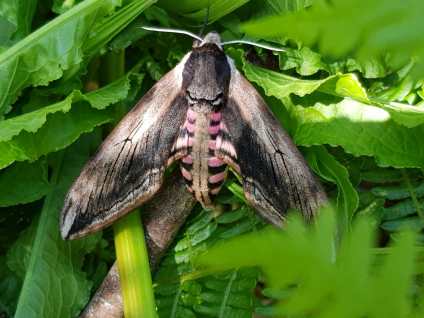
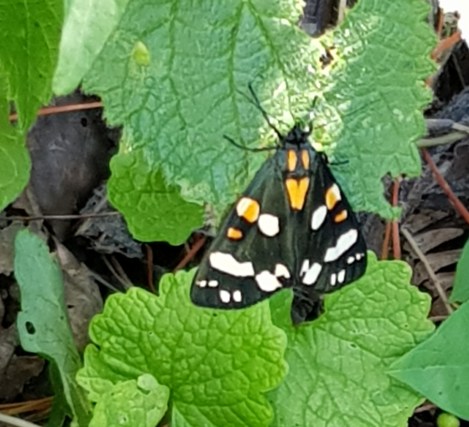
Because they are rarely seen by people, who hence know little about them, moths are the “poor relation” and are probably thought of by many as dull and uninteresting. If butterflies are the “Beauty” then they are the “Beast”. However, as any lepidopterist will tell you, this is a complete misconception and most undeserved. There are many stunningly beautiful moths in colours every bit as beautiful as the butterflies, if not more so. Take a look online at the stunningly beautiful Madagascan moon moth, for instance, or our own, native, elephant hawk moth or scarlet tiger moth.
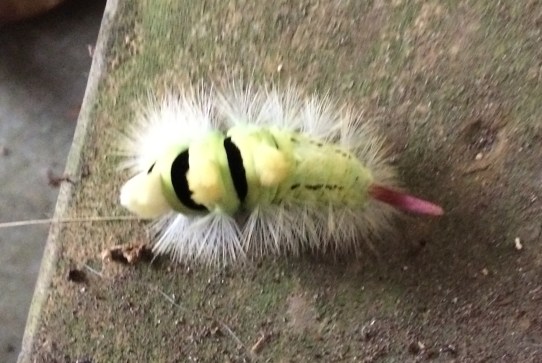
Moth caterpillars, often much larger than those of butterflies , can also be very striking and colourful. Many of them sport hairs, large “eye” markings, bright colours and even horn like appendages- all mechanisms for warding off predators.
Finally, moths play an important role in our ecosytem. They are very beneficial in our gardens as vital flower pollinators. Their caterpillars also help to control weeds. For example: the convolvulus hawk moth caterpillar feeds on bindweed; many species feed on nettles; rosebay willow herb or fireweed is the food plant for the elephant hawk moth and the garden tiger moth caterpillar feeds on docks. Moths, in turn, themselves also provide food for predators further up the food chain such as birds and bats.
Far from being an unwelcome pest, or dull and uninteresting, moths are a beautiful, fascinating, very beneficial and vital part of our ecosystem.
 Never Mind the Bullocks
👍🙂awesome content.
I have too some views on our lovely ecosystem and sharing the same.
https://healthjaagran.com/2020/08/14/amazing-dying-of-powerful-ecosystems-ecological-collapse/
LikeLike